Inkitt Galatea: Audio & eBooks
- 4.6
- Rating
- 10.00M
- Installs
- Free
- Price

 Analysis by App-foxy
I found Galatea: Books & Audiobooks most interesting when I stopped treating it like a conventional ebook shelf and started using it as a connected reading service. It sits in the Books & Reference category, comes from Inkitt Inc, and is free to install, with optional purchases priced from $0.99 to $399.99 per item. The basic appeal is easy to understand: instead of choosing one book before leaving home, I can browse novels, stories, ebooks, and audiobooks from the same place and decide what suits my mood.
That convenience also defines the app’s main trade-off. Galatea feels most at home when the phone has a dependable internet connection. Covers, discovery, reading choices, and audio access all belong to an experience built around reaching a large, changing library rather than carrying a small, permanently prepared collection. If you enjoy serialized fiction, like sampling new stories, or want both text and audio in one reading app, it is an appealing option. If your priority is a quiet, ownership-focused library that behaves exactly like a traditional ebook reader, I would approach it more carefully.
How Galatea feels when the connection is doing the work
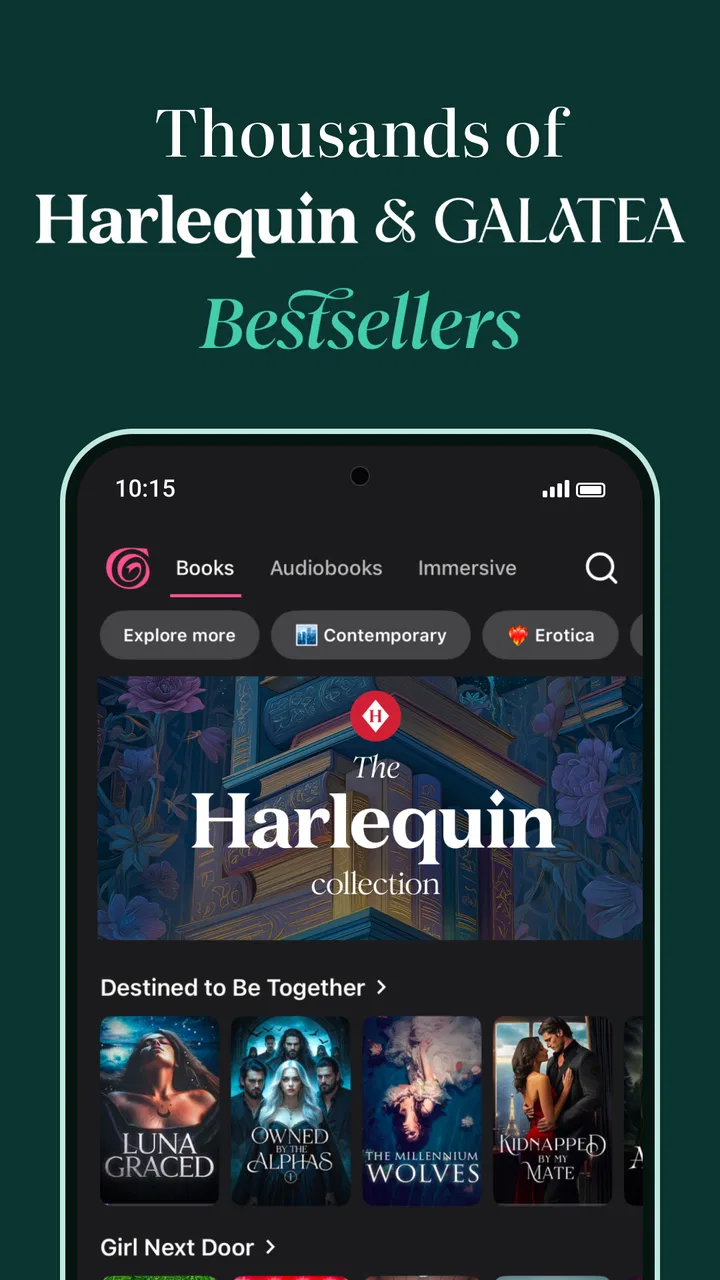
My first impression was that the app encourages browsing before reading. That is useful when I have no fixed plan: I can open it during a break, look through fiction, and choose something based on my current attention span. A short session can become a few pages, while a longer commute can turn into an audiobook session. The combination makes Galatea feel less like a single-purpose reader and more like a doorway into ongoing entertainment.
You May Also Like

 Blood Strike: 2.5 Anniversary
Blood Strike’s Loadouts Turn Every Drop Into a Tactical Gamble
A close look at Blood Strike’s custom loadouts: how fast access to signature weapons reshapes its battle royale rhythm, rewards preparation, and narrows the gap between fights.

 Pandora - Music & Podcasts
Pandora’s Music Is Easy to Start, but Harder to Recover
Pandora’s strength is its low-effort path from a seed to a station. Its weak spot is how much confidence it asks you to place in connection, setup, and quiet recovery.

 8 Ball Pool
 Is Built on Rivalries, Rematches, and Routine
A close look at the rivalries, rematches, shared routines, and unanswered safety questions that turn a quick pool match into a persistent mobile community.

 Samsung Music
’s Quiet Strength Is Playing What You Already Own
Its reach comes less from spectacle than from dependable access to a personal library. That simplicity is both the app’s strongest retention engine and its ceiling.

 AccuWeather: Weather Radar
AccuWeather Review: A Quick, Clear Forecast for Everyday Decisions
For everyday plans, the best forecast is the one you can understand quickly. AccuWeather makes rain timing, radar, and local conditions easy to act on, with a few trade-offs.

 Hill Climb Racing
Why Hill Climb Racing Still Turns Crashes Into One More Run
A tiny car, a bumpy hill and one more upgrade: Hill Climb Racing keeps resurfacing because its simple chaos makes every near-miss feel personal.
More From Our News Desk
View All News


The network matters most at the moments when I am discovering or changing direction. Opening the service, moving through its catalog, selecting a new title, and switching between reading choices are all more comfortable when the connection is stable. A weak signal does not necessarily make every moment impossible, but it makes the experience less predictable. Pages or content may take longer to become available, and the pause between deciding what to read and actually reading becomes more noticeable.
This is an important distinction from a downloaded book app. With a conventional ebook purchase, I usually think of the library first and the connection second. With Galatea, I think about the connection whenever I am exploring something new. That is not automatically a flaw; it is simply the shape of the product. The app’s strength is access to variety, while the cost is greater dependence on the service being reachable at the right time.
I also noticed that connectivity changes how I make reading decisions. When everything is immediately available, I am more likely to sample several stories instead of committing to one. That can be refreshing, especially for readers who lose interest quickly. It can also encourage an endless browsing loop. My practical advice is to choose a title before a journey or a scheduled break rather than assuming discovery will be equally pleasant in a crowded station, elevator, or patchy rural area.
The service has a strong audience behind it. It carries an average rating of 4.6 from around 572 thousand ratings and has passed 5 million installs. Those figures do not guarantee that every story will match my taste, but they do suggest that Galatea has become a familiar destination for readers who want mobile fiction rather than a simple document viewer.
Reading on a phone instead of carrying a book
Galatea makes the most sense in small, irregular pockets of time. I can imagine using it while waiting for an appointment, sitting in a café, or taking a break between tasks. The phone is already in my hand, so opening a story takes less effort than carrying a separate paperback or switching to another dedicated device. That low friction is particularly helpful for people who read in short bursts rather than setting aside an uninterrupted evening.
A realistic routine would be to read a few chapters at home, continue during a lunch break, and use audio while doing a simple household task. The text and audiobook sides give the same general service more flexibility than a text-only app. When my eyes are tired, listening is more attractive; when I need to concentrate on exact wording, reading is better. I would not assume that every title will suit both formats equally, but having both types of content in one reading environment is a meaningful advantage.
The phone format is not perfect for everyone. A small screen can make long sessions tiring, especially for readers who prefer the calm, paper-like focus of an e-reader. Notifications and other apps are always nearby, so Galatea cannot create the same separation from the rest of the phone. I found it better for frequent, accessible reading than for replacing a dedicated reading device during a multi-hour literary session.
Age guidance also matters here. Galatea is rated Teen, so I would not choose it as an unsupervised reading environment for a young child. Teen readers and adults are the more natural audience, particularly those comfortable exploring contemporary stories and audio content through a mobile service. Parents should still make their own judgment about individual titles rather than treating the age label as a guarantee that every story will suit every teenager.
The current version is 14.21.0 and the app requires Android 8.0 or later. That makes checking the phone’s operating-system version worthwhile before planning to use it on an older device. On a compatible phone, keeping the app current is also sensible because connected reading services can change how content is delivered over time. I would update before a trip rather than waiting until I am already relying on the app away from home.
What happens when the signal becomes unreliable
The most revealing test for a connected reading app is not a fast home network; it is the awkward middle ground where the signal keeps dropping. In that situation, Galatea’s appeal depends on how much I have already prepared. If I open it with a clear connection and begin reading immediately, the experience feels straightforward. If I expect to browse freely while moving through poor coverage, the uncertainty becomes part of the experience.
That changes my workflow. Before leaving a reliable connection, I would open the app, select the story or audio content I expect to use, and allow the relevant material to become available through the normal in-app process. I would not wait until boarding a train or entering a basement to decide what to read. This is not a claim that every title remains usable without a connection; it is simply the safest habit for a service whose catalog and delivery are connection-sensitive.
When something fails to load, patience is more useful than repeatedly tapping the same control. I would first check whether other apps can reach the internet, then return to Galatea and retry once the connection is stable. If the app is open but the selected content does not appear, closing and reopening it can be a reasonable recovery step. The key lesson is to separate a network problem from an app problem before assuming the title or account is at fault.
Travel exposes another weakness: connectivity may be expensive or inconsistent outside a home network. A commuter with a reliable mobile plan may barely notice. Someone using limited data, roaming service, or intermittent public Wi-Fi may need to plan more carefully. Audio is especially worth treating cautiously because extended listening can be a heavier use case than briefly opening a text page. I would prepare on Wi-Fi whenever possible and avoid making a first-time title selection in a place where the network is already struggling.
Recovery is also about maintaining reading momentum. If I know I will be offline or poorly connected, I prefer to finish choosing content early, keep the phone charged, and avoid assuming that a last-minute search will work. A paper book still wins for absolute reliability, while a dedicated ebook reader may be a better travel companion for someone who wants a controlled library with minimal dependence on a phone connection.
Using the app without wasting mobile data
Galatea can fit a data-conscious routine, but it rewards deliberate habits. I would use a home or trusted Wi-Fi connection for browsing widely, sampling unfamiliar titles, and setting up an audiobook session. Once I know what I want, I would stay with that choice instead of repeatedly jumping through the catalog on mobile data. This reduces unnecessary discovery activity and makes the phone’s connection work for reading rather than constant searching.
Audio deserves its own plan. I would not begin a long listening session automatically just because the title is available. First I would check that I am connected through a suitable network or that the content has been prepared in the way the app permits. If I am on a limited plan, text is the safer default for spontaneous reading, while audio is better reserved for predictable conditions such as a home network or a commute with dependable service.
There is also a battery trade-off. Reading on a phone already keeps the screen active, and listening can encourage longer sessions with the device in use. I would lower screen brightness to a comfortable level, carry a charger for long trips, and avoid opening the catalog repeatedly when I already know what I want. These are ordinary phone habits, but they matter more when a reading service is designed for frequent connected use.
The free entry point makes experimenting easy, but the optional purchases deserve attention. Galatea offers in-app purchases ranging from $0.99 to $399.99 per item, so I would treat the paid elements as part of the reading decision rather than assuming every attractive story follows the same access model. Before spending, I would check what the particular purchase provides and whether it matches my reading pace. A reader who dislikes interruptions or tightly controlled access should compare the overall cost with buying individual ebooks outright.
This is where Galatea differs from the usual alternatives. A public-library app may be better for readers who want borrowing through an existing library membership. A traditional ebook store may be clearer for people who prefer buying a specific title and keeping their collection organized around purchases. A podcast or audiobook-focused service may offer a more specialized listening workflow. Galatea is strongest when I value variety, mobile discovery, and the ability to move between stories and audio in one place.
Who will enjoy it, and who should choose something else?
I would recommend Galatea to a reader who likes finding new fiction without deciding on a single book in advance. It also suits people who read in fragments: a few minutes in the morning, another scene during a break, and perhaps audio later in the day. The connected catalog is useful for that kind of flexible routine, especially when the phone is the device I already carry everywhere.
It is a good match for someone who enjoys discovering stories through a mobile interface rather than carefully curating a small personal collection. The presence of audiobooks broadens its usefulness, too. I can choose text when I want visual focus and audio when my hands or eyes are occupied. That flexibility is more valuable than it first appears because it helps a reading habit survive changes in schedule.
I would hesitate to recommend it to a reader who regularly travels through areas with poor reception and does not want to plan content in advance. I would also point traditional ebook buyers toward a store-centered reader if ownership, predictable pricing, and a permanently tidy library matter more than browsing. Someone who wants a distraction-free e-ink experience may prefer dedicated hardware, while a young child may need a more tightly supervised reading environment than a Teen-rated service provides.
Another consideration is spending discipline. The free installation lowers the barrier to trying the app, but the broad range of optional purchase prices means I would not hand the phone to a child with unrestricted purchasing access. Adults who know they can be tempted by ongoing stories should decide on a personal budget before buying anything. That is not a criticism unique to Galatea; it is a practical response to a service designed to make continuing a story easy.
My connectivity verdict
After using Galatea as a mobile reading and listening service, I see its best quality as flexibility rather than simplicity. It gives me more ways to fit fiction into the day, and the combination of ebooks, novels, stories, and audiobooks makes the phone feel like a versatile reading companion. Inkitt Inc has built an app that is particularly attractive to people who enjoy exploration and do not want their next story limited to one format.
Its connection dependence should shape how I use it. I would browse and prepare while connected to reliable Wi-Fi, decide on content before entering a weak-signal area, and be cautious with extended audio on mobile data. Those steps remove much of the avoidable friction, but they do not turn the service into a substitute for a fully self-contained book collection.
The app is free to start, runs on Android 8.0 or later, and carries a Teen age rating. With its 14.21.0 release and a substantial audience, it feels established enough to deserve a serious trial rather than a quick glance at the store page. My final recommendation is straightforward: choose Galatea if you want a connected stream of mobile fiction and audio that adapts to short reading opportunities. Skip it in favor of a library, purchase-based ebook app, or dedicated reader if dependable offline-style access and ownership are more important than discovery.
FAQs for Inkitt Galatea: Audio & eBooks
01What is Galatea: Books & Audiobooks?
Galatea: Books & Audiobooks is a digital platform offering a vast library of immersive fiction in both text and audio formats. It features interactive storytelling, allowing users to experience stories with added sound effects and visual elements. Ideal for book lovers who enjoy dynamic and engaging narratives.
02Is Galatea free to use?
Galatea offers a free version with limited access to its content. Users can explore selected stories and chapters without charge. However, for full access to the library and premium features, a subscription or in-app purchases may be necessary. This model allows users to try the app before committing financially.
03What genres are available on Galatea?
Galatea provides a wide range of genres, including romance, fantasy, thriller, science fiction, and more. The app frequently updates its catalog with new stories and series, catering to diverse reading preferences and ensuring there’s always something fresh for every type of reader or listener.
04Can I read offline on Galatea?
Yes, Galatea allows users to download stories for offline reading. This feature is particularly useful for users who want to enjoy their favorite stories without needing an internet connection. Users can download specific chapters or entire books, making it convenient for on-the-go reading.
05How does the interactive element of Galatea work?
Galatea enhances the reading experience with interactive elements such as sound effects, music, and visual effects that accompany the text. Some stories might also include choices that influence the plot direction, making the experience more engaging and personalized. This interactivity sets Galatea apart from traditional reading apps.
Pros
- Wide range of genres available.
- Interactive reading experience.
- Offline access to content.
- Regular updates with new titles.
- User-friendly interface.
Cons
- Limited free content offerings.
- In-app purchases can be pricey.
- Requires account creation.
- Occasional app crashes reported.
- Ads can be intrusive.

Inkitt Galatea: Audio & eBooks
Gallery